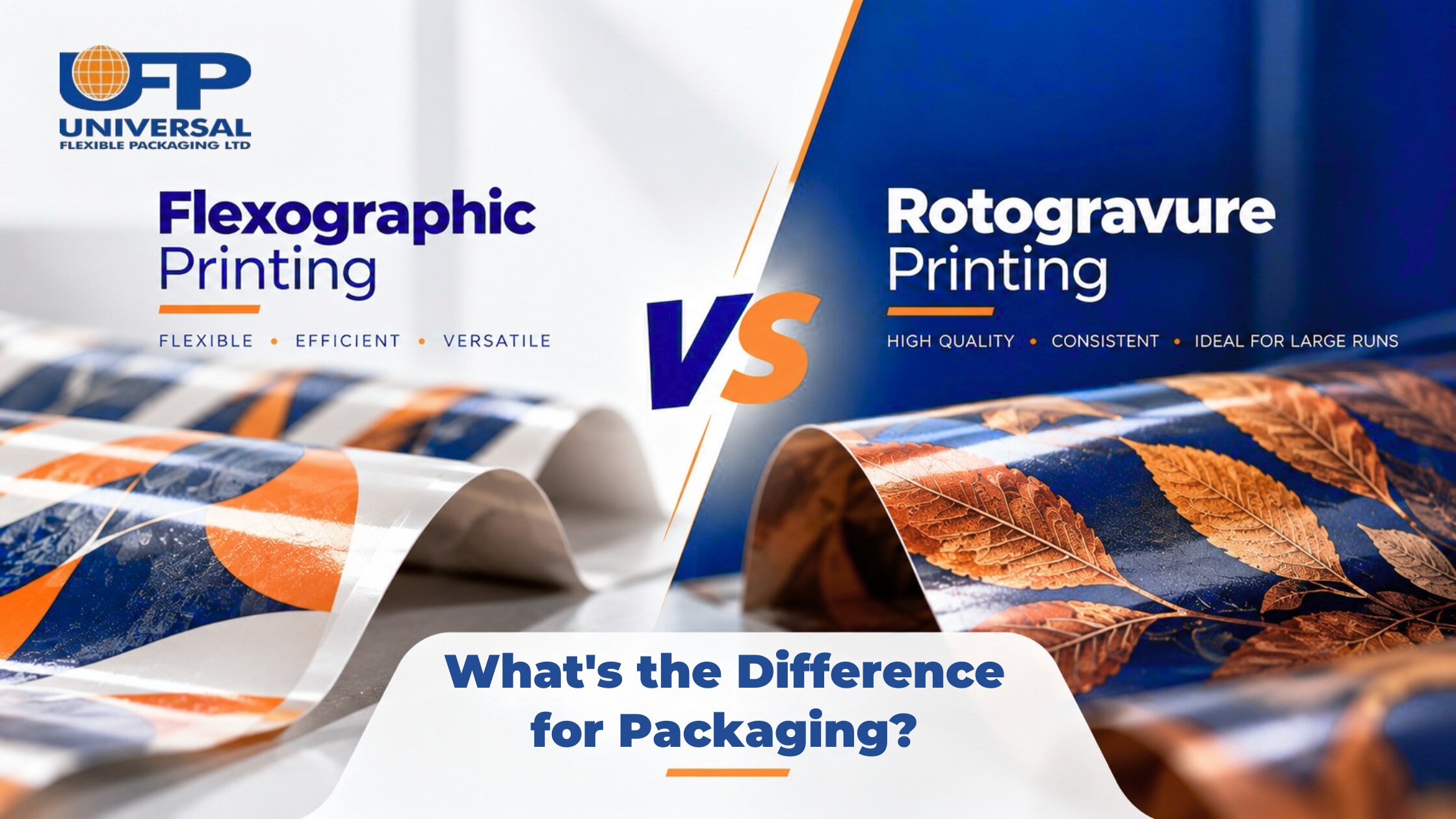
Printing quality plays an important role in flexible packaging.
The printing method used can influence factors such as artwork requirements, production processes, lead times and the final appearance of the finished pack.
Two common printing methods used for packaging are flexographic printing and rotogravure printing.
Both methods use different processes to transfer ink onto packaging materials and may be suited to different packaging requirements.
Flexographic printing uses flexible printing plates to transfer ink onto packaging materials. Rotogravure printing uses engraved cylinders to transfer ink onto the packaging material. The right printing method depends on factors such as artwork requirements, production volumes, packaging specifications and the needs of the project.
What is flexographic printing?
Flexographic printing is a printing process that uses flexible plates to transfer ink onto the packaging material.
Flexographic printing is used across different packaging applications where flexible plates are suitable for the required print process.
Businesses considering flexographic printing should review:
- Artwork requirements
- Number of colours needed
- Packaging material
- Production volumes
- Required print quality
What is rotogravure printing?
Rotogravure printing uses engraved cylinders to transfer ink onto the packaging material.
The engraved cylinders allow consistent ink transfer and can be suitable for projects with particular print detail and repeatability requirements.
Businesses considering rotogravure printing should review:
- Artwork complexity
- Production volumes
- Cylinder requirements
- Project timescales
- Overall packaging requirements
What is the difference between flexographic and rotogravure printing?
The main difference is the way ink is transferred onto the packaging material.
Flexographic printing uses flexible plates, while rotogravure printing uses engraved cylinders.
Key considerations include:
- The level of print detail required
- Production volumes
- Artwork specifications
- Project timelines
- Packaging requirements
Neither method is suitable for every application. The right choice depends on the needs of the packaging project.
Which printing method is right for your packaging?
Choosing a printing method requires understanding the wider packaging requirements.
Businesses should consider:
- The packaging material being used
- The artwork design
- Production quantities
- Required finish and appearance
- Future packaging requirements
Working with a packaging supplier can help businesses understand the available printing options and assess which approach fits their requirements.
How does UFP support packaging printing requirements?
UFP provides flexible packaging solutions supported by technical development, printing, packing, storage and delivery.
The business supports different stages of the packaging process, from technical requirements through to production and supply.
UFP provides printing capabilities as part of its flexible packaging services for printed packaging requirements.
UFP also works with recyclable flexible film options and focuses on balancing sustainability considerations with product protection, print quality and production requirements.
Ready to discuss your packaging requirements?